CacheIQ
Pricing intelligence for secondhand retail.
For thrift, consignment, and vintage stores.
Co-Founder, Engineering Lead · Berkeley SkyDeck
January 2026 - Present
Problem
Secondhand inventory gets priced by hand, one item at a time.
Every piece is unique and non-barcoded, so someone has to look at it, judge its condition, search for comparable sales, and land on a price before it can go up for sale.
Product
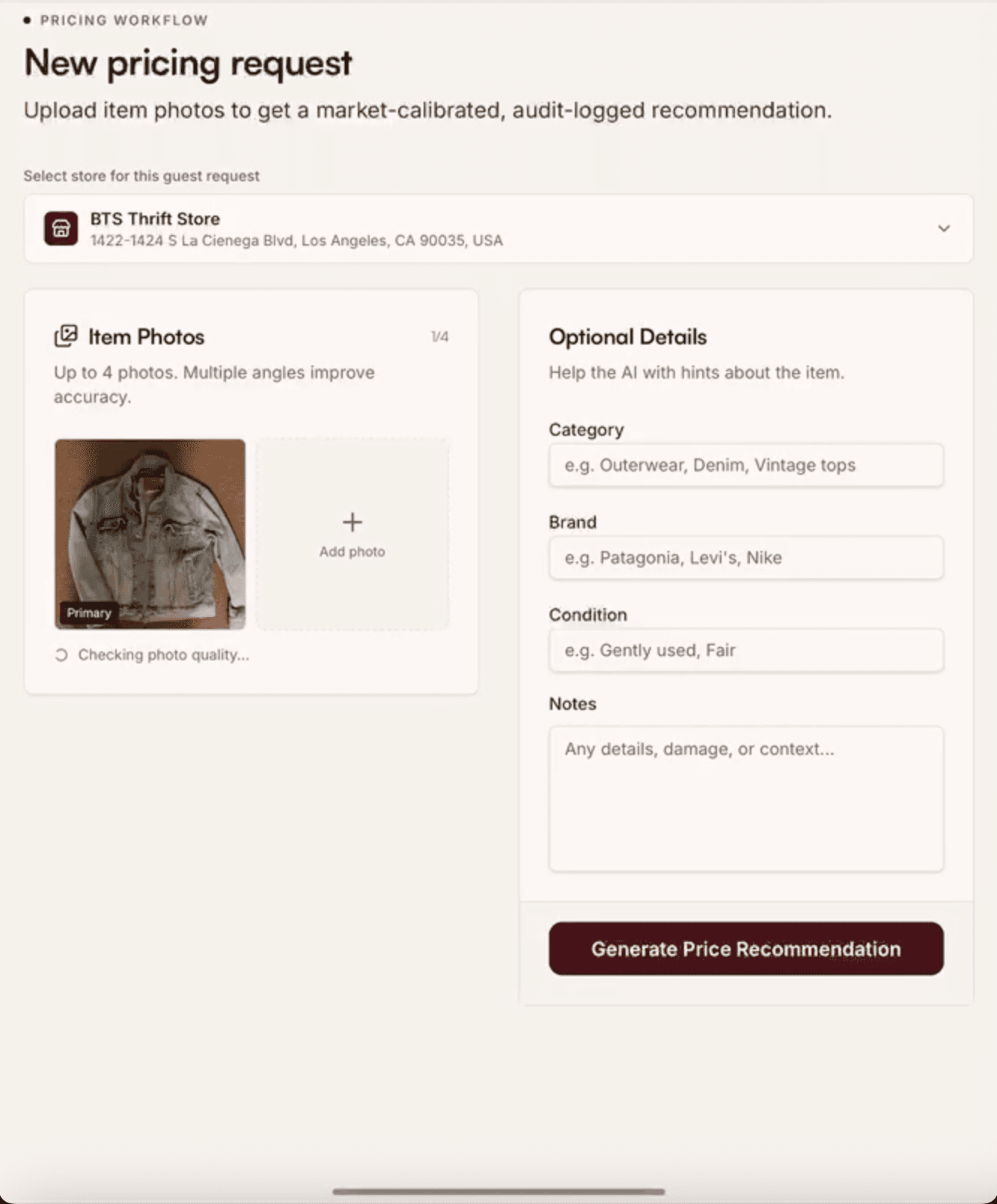
Step 1
Upload an item
A store uploads a photo of the item.
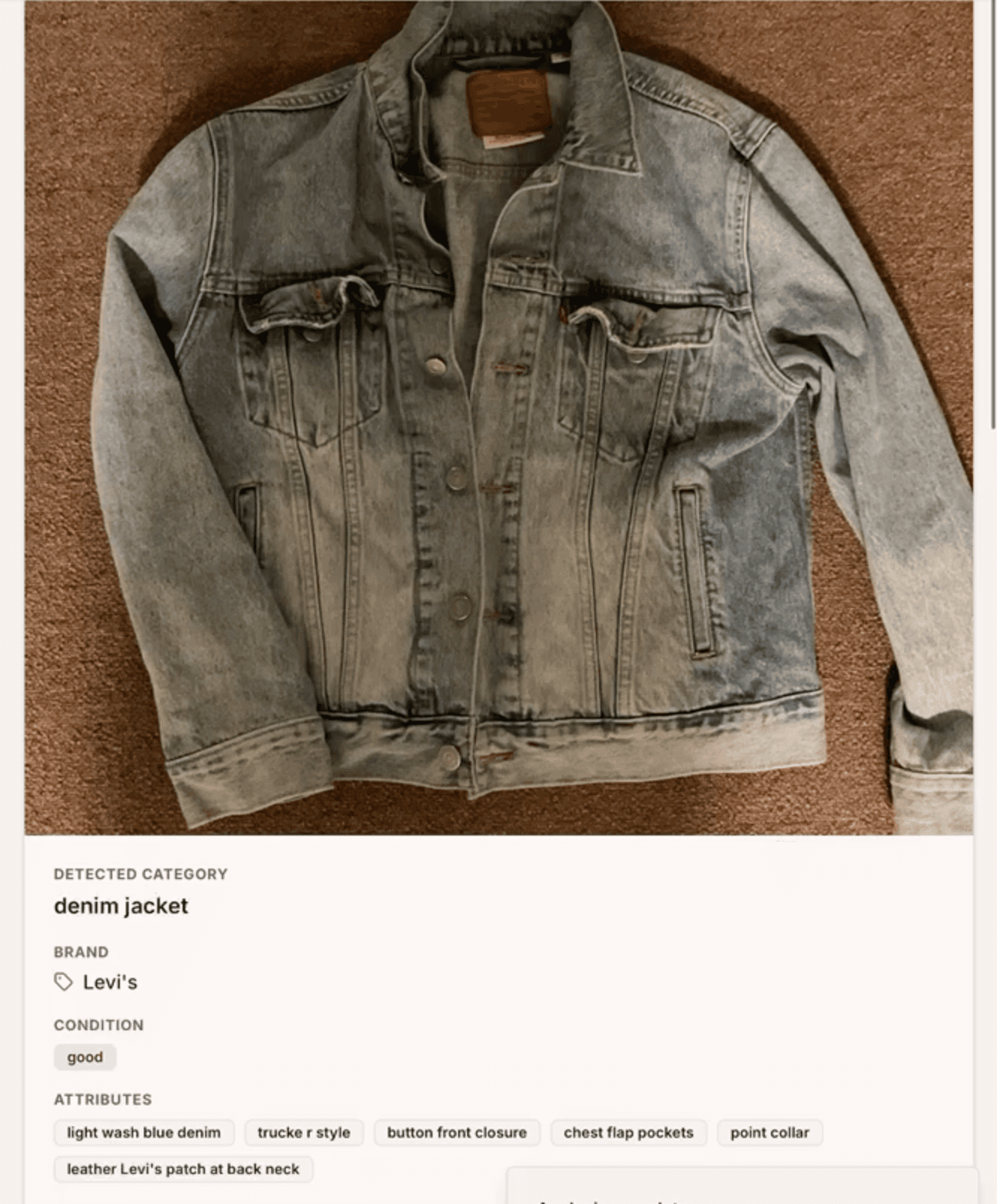
Step 2
Understand the item
Category, brand, condition, and detected details.
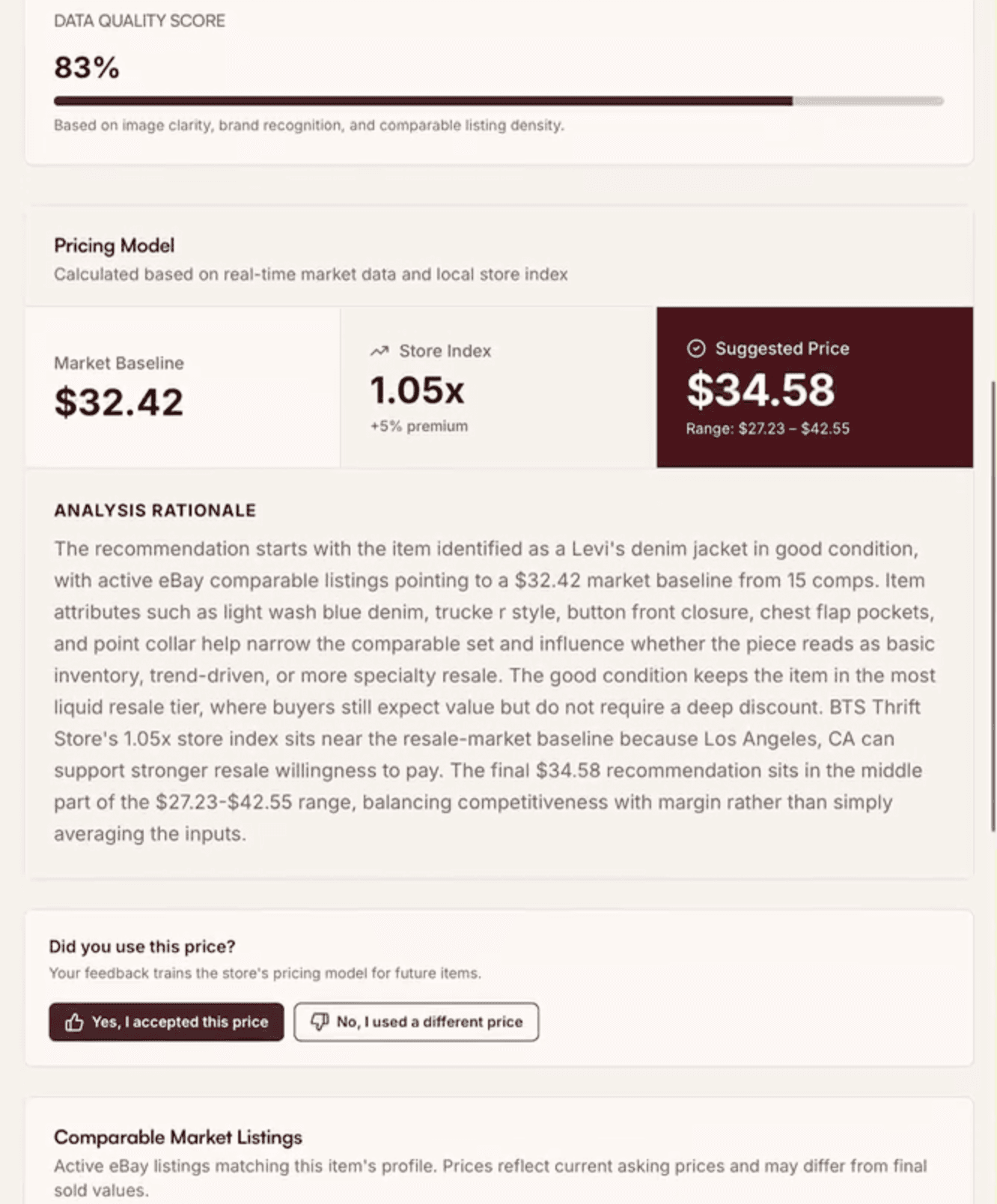
Step 3
Recommend a price
A price with a confidence range, backed by comparables.
How it works
Item photos
Store uploads one or more photos of the item
Vision LLM
GPT-5.6 extracts structured attributes from the images
Structured attributes
Category, brand, condition, material, and more
Live comparable data
Real-time eBay listings for similar items
Robust statistical processing
IQR outlier filtering and trimmed mean across comparables
Store heuristics
Adjustments for each store's own pricing objectives
Price recommendation
A store-specific price with a confidence range
Feedback loop
Accepted or overridden prices refine future recommendations
Pricing engine
Comparables get filtered, adjusted, and turned into one number.
Live eBay comparables are cleaned with IQR outlier filtering and a trimmed mean, then adjusted by each store’s own pricing objectives. Accepted or overridden prices feed back into future recommendations.
Live eBay comparables
IQR outlier filtering
Trimmed-mean baseline
Store-specific heuristics
Price recommendation
Validation & impact
80%
reduction in per-item pricing time
50+
store interviews
10+
pilot stores
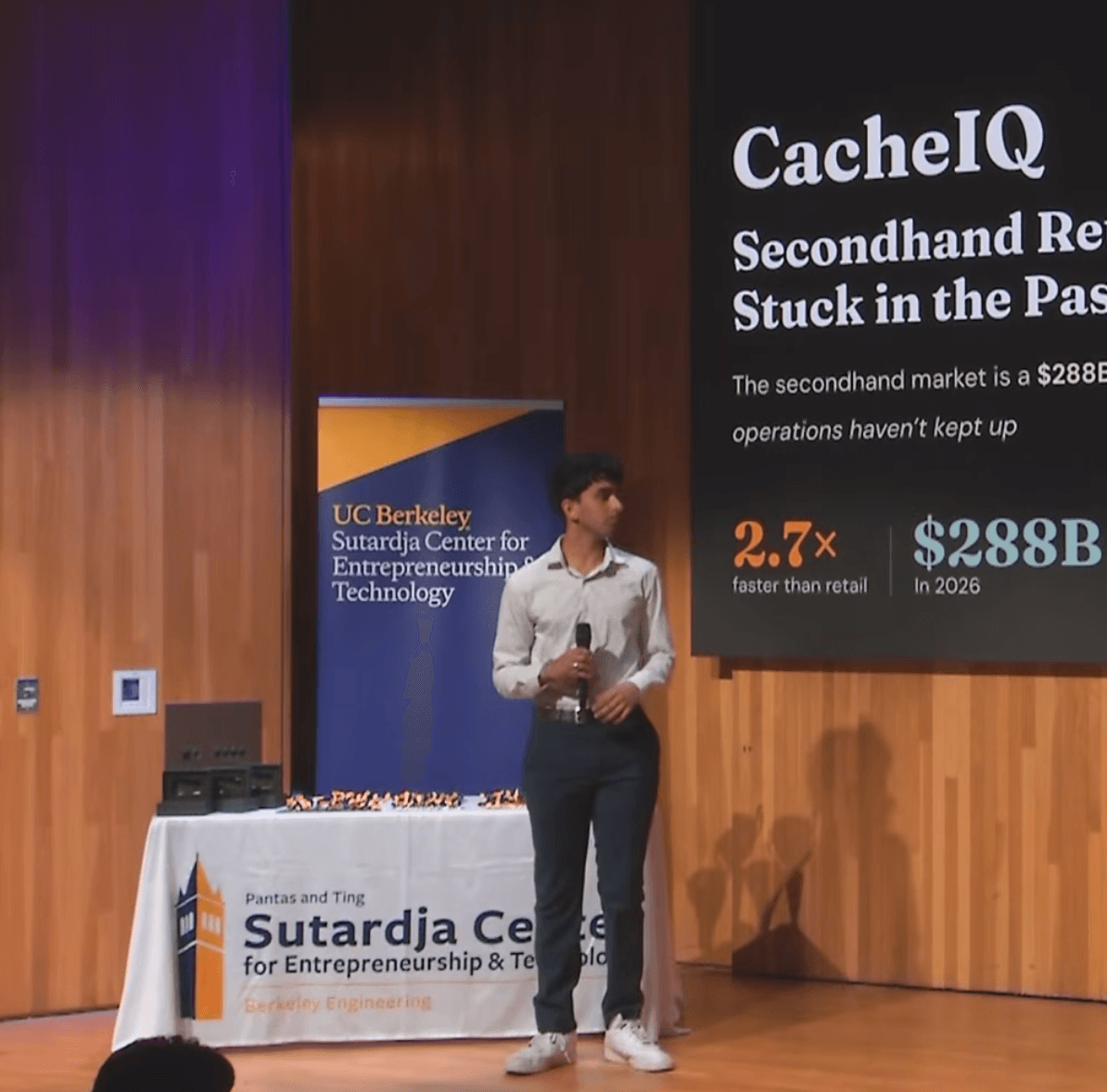
Recognition
1st Place
UC Berkeley Collider Cup XVIII
Selected for Berkeley SkyDeck Pad-13
Read the Berkeley SCET story ↗